PlayToEarn









 Plus
Plus



Pengu Card Goes Live Globally
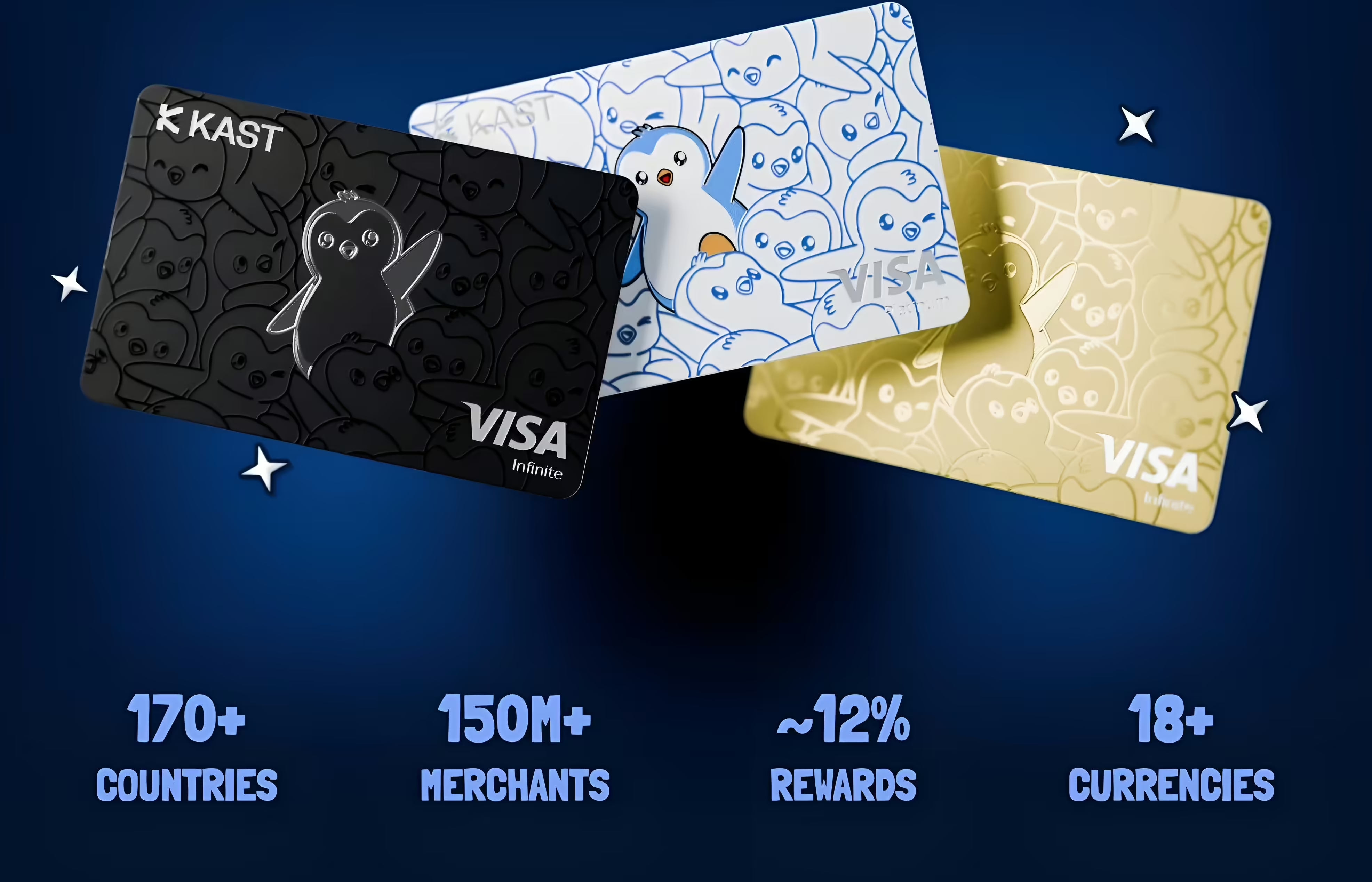
The Pengu Card is now available worldwide. Announced by Pudgy Penguins on March 24, 2026, the card reached full global deployment through a partnership with KAST, a stablecoin-native fintech platform. The rollout covers more than 170 countries, 150 million merchants, and 18 supported currencies, placing the Pudgy Penguins brand directly inside mainstream consumer finance.
The card lets holders pay with stablecoins including USDC and USDT, as well as the PENGU token, at any Visa-enabled point of sale. No manual exchange step is needed beforehand. KAST handles the conversion at the moment of purchase, making the process functionally identical to using a standard debit card. The card also integrates with Apple Wallet and Google Wallet, and supports global ATM withdrawals.
Three Tiers, Up to 12 Percent Cashback
The Pengu Card launches with three distinct tiers targeting different user profiles. The Standard tier offers 6 percent cashback on spending. The Black tier raises that to around 8 percent. The Gold tier delivers a maximum of 12 percent, depending on activity and region. All three tiers also offer yield on card balances of up to 7 percent.
Users need to create an account on KAST to receive the card. The initial rollout is virtual-only, with a physical card planned for a later release. A referral system is active on the waitlist: each user receives a unique invite code, and the top referrers can earn upgraded cards, including Premium and Black versions. KAST has noted that final rewards, limits, and yields may vary by jurisdiction and are subject to change.
From NFTs to Everyday Spending
The launch marks a significant shift in how Pudgy Penguins positions itself as a brand. Originally a collection of 8,888 NFTs minted in 2021, the project has steadily extended into physical retail, gaming, and now consumer payments. Parent company Igloo Inc., led by CEO Luca Netz, has been building toward this kind of real-world utility for several years.
The February 2026 announcement of the waitlist pushed the PENGU token up approximately 10 percent in a matter of hours, reflecting clear demand from the community for tangible financial products tied to the brand. PENGU itself trades on Solana and has also been the subject of an ETF proposal jointly filed by Grayscale and T. Rowe Price, which remains under review by the U.S. Securities and Exchange Commission.
KAST and Stablecoin Infrastructure
KAST describes itself as a global neobank built on stablecoin infrastructure. Its founder and CEO, Raagulan Pathy, has positioned the platform around the idea of enabling IP-backed payment products that merge digital culture with mainstream finance. The Pengu Card fits squarely into that model: a product that turns community membership into a functional spending identity.
For KAST, the Pudgy Penguins partnership expands its reach into one of the most recognized consumer-facing brands in the onchain space. For Pudgy Penguins, KAST provides the compliance infrastructure and global card network access needed to make crypto spending feel frictionless to users who have no prior experience with decentralized finance.
The move also reflects a broader pattern taking shape across web3 in 2026. Projects that established their value through collectibles and community are now racing to deliver practical financial tools. Pairing token-based balances with a Visa card is among the most direct ways to demonstrate that crypto assets can function as money rather than speculative instruments.
Crypto Payments at Scale
The Pengu Card is not the only crypto debit product on the Visa network, but the scale of its rollout stands out. Reaching 150 million merchants across 170 countries from day one of the global launch puts it well ahead of most comparable products in terms of geographic coverage. The 18-currency support further extends its utility for holders who travel or transact across borders.
The referral mechanic adds a community-native layer to what would otherwise be a straightforward fintech launch. By rewarding top recruiters with upgraded card tiers rather than token incentives, the team avoids the short-term farming dynamics that have undermined other web3 growth campaigns.
Pudgy World Adds a Season Pass as the Ecosystem Expands
The Pengu Card launch arrives while the broader Pudgy Penguins ecosystem is active on multiple fronts. The flagship browser game, Pudgy World, went live on March 9, 2026, as a free-to-play title set across 12 towns in a frozen world called The Berg. Players explore the map, complete story-driven quests centered on finding a missing character named Polly, and take part in mini-games scattered throughout the environment. No wallet or NFT purchase is required to start. Pudgy Penguin NFT holders and owners of physical Pudgy Toys sold at major retail chains can unlock additional in-game content by scanning a QR code included with each toy.
The game runs on Abstract, Igloo Inc.'s own Ethereum Layer 2 network, and keeps its blockchain layer largely invisible to casual players. The PENGU token responded to the launch with a 9 percent single-day gain, and Pudgy Penguin NFT floor prices rose in dollar terms as Ethereum moved higher during the same window.
On March 23, Pudgy World activated the Pudgy Pass, a season-style progression system. Players complete missions across The Berg to earn Battle Points, level up their pass, and unlock exclusive character traits. Daily missions and ranked leaderboards were added alongside the pass, pushing the game toward a more competitive structure while maintaining its social and exploration foundation. The fish collection mechanic, which functions as the game's core resource loop, remains central to progression.
The combination of a live browser game with an active pass system, a physical toy line tied to in-game avatars, and now a globally available debit card builds out an unusually coherent ecosystem for a project that began as a profile-picture NFT collection. Whether that ecosystem can sustain long-term user engagement beyond the initial launch window is the open question. The infrastructure, at least, is now in place.