PlayToEarn















 Plus
Plus



Withdrawals Open, But the Clock Is Hidden
Nexira posted a quick update on March 10, 2026 at 2:00 AM that reached 59,502 impressions within hours. The message confirmed that $NEXI withdrawals are opening on that day while deliberately keeping the exact timestamp undisclosed. The team stated that revealing a precise withdrawal time would give bots and automated systems a predictable window to flood the network, creating congestion and an unfair environment for real users. By leaving the timing open-ended, Nexira pushes the advantage back toward human participants who stay engaged across the day rather than automated scripts waiting for a specific trigger.
This approach follows the NEXI Token Generation Event (TGE) and multi-exchange listing that went live on March 9, 2026. Trading in the NEXI/USDT pair opened on KuCoin, Gate.io, MEXC, and BingX simultaneously at 11:00 UTC on March 9. Deposits had been available since March 6, and KuCoin specifically scheduled withdrawals for March 10 at 10:00 UTC. The token reached its all-time high of $0.04798 on launch day, with a current circulating supply of 115 million tokens against a total maximum supply of 500 million.
AI System Catches Fake IDs, False Information, and Multi-Accounting
Alongside the withdrawal update, Nexira disclosed the results of an ongoing security audit. The platform's AI validation system flagged multiple cases of fraudulent behavior across the airdrop participant pool. The violations include false information submitted during registration, fake identification documents, and multi-accounting, which involves one person creating several wallets or accounts to claim a disproportionate share of the airdrop allocation.
Every account flagged during this review has been disqualified and its reward allocation forfeited immediately, according to the announcement. The team framed the move as a matter of integrity, not just compliance. Airdrop programs are particularly vulnerable to sybil attacks, where a single actor claims rewards meant for many independent participants. By deploying an AI-driven detection layer and acting on its findings publicly, Nexira is signaling that the reward distribution is being enforced rather than simply trusted to be honest.
The enforcement comes at a critical moment. The Nexira airdrop distributed over 400,000 reward boxes ahead of the TGE, and 15% of the full 500 million NEXI token supply was earmarked for community airdrop rewards. The conversion rate was set at 15 RUBY for every 1 $NEXI. At scale, even a small percentage of fraudulent claims could represent a significant misallocation, making the AI-driven disqualification process a meaningful protection for legitimate participants.
What Nexira Is and Where It Came From
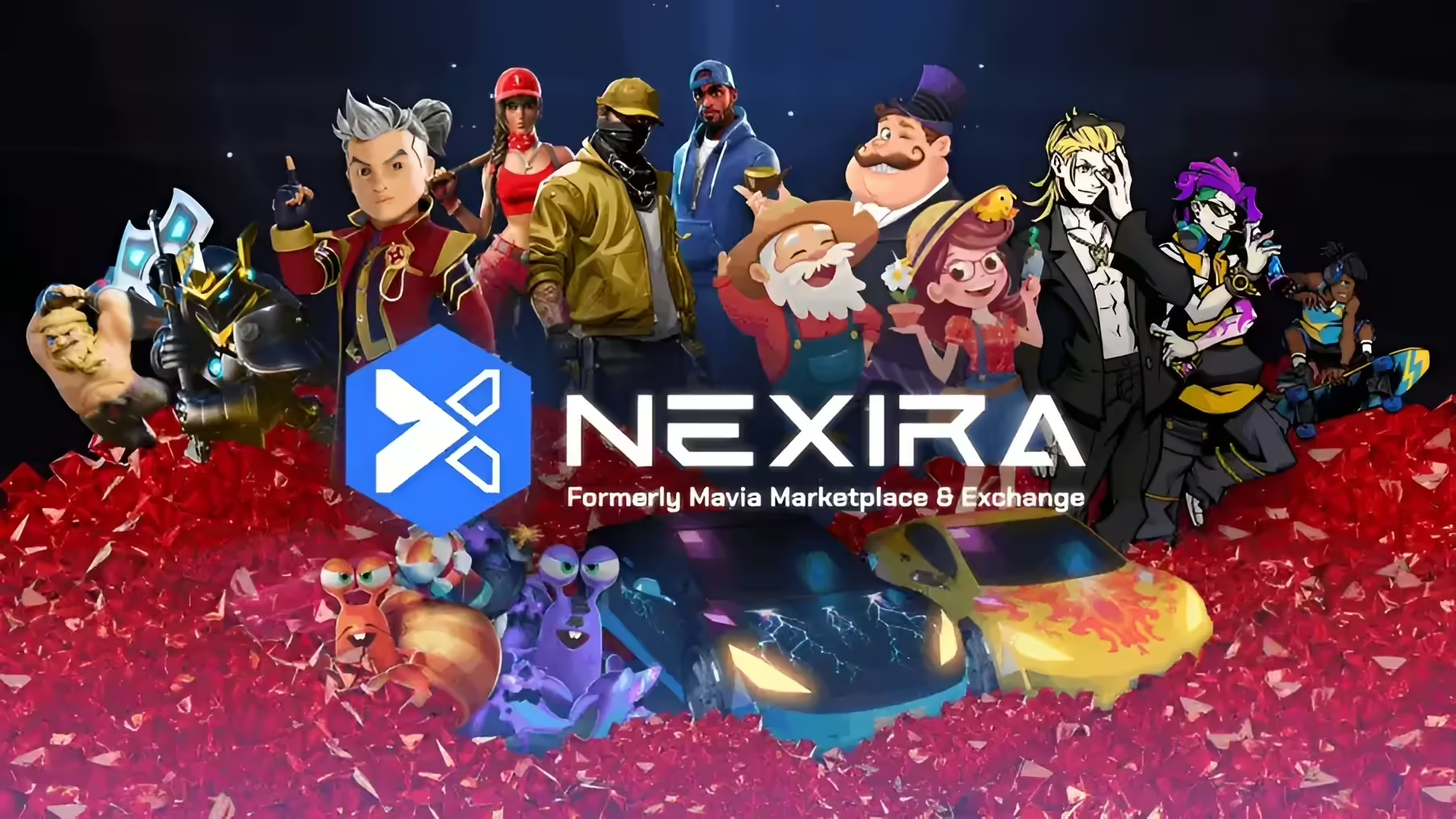
Nexira is a cross-game Digital Asset Exchange Platform, referred to as a DAEP, built by the same team behind Heroes of Mavia. The project evolved directly from the Mavia Marketplace and Exchange (MPEX), which originally served as the internal trading hub for Heroes of Mavia assets. As that ecosystem expanded, the team recognized an opportunity to build broader economic infrastructure connecting multiple games rather than serving one title.
The platform is built around Ruby, a shared in-game currency that acts as the single medium of exchange across all games in the Nexira ecosystem. Instead of each game running a closed economy with tokens that have no utility outside the game's own walls, Ruby enables players to earn, trade, and spend assets across multiple integrated titles. The AI-powered matching engine sits behind the marketplace and connects buyers and sellers across the ecosystem automatically.
The Nexira game family currently includes Heroes of Mavia alongside five other in-house developed titles including Mavia Mini and Turbo. The platform supports blockchain-compatible games across mobile, web, and desktop formats in both real-time and turn-based configurations.
Tokenomics and the No-VC Launch Model
$NEXI launched without any venture capital allocation or presale rounds, which is a deliberate structural choice designed to reduce selling pressure from early institutional investors at launch. With no pre-allocated VC tokens waiting to be dumped, the circulating supply at TGE reflects only the community and ecosystem allocations rather than investor unlocks.
Of the 500 million total supply, 62% is dedicated to gameplay and ecosystem rewards. That means the majority of tokens entering circulation over time will come directly from player activity rather than from early backers or team unlocks. The airdrop allocation covered 15% of supply, and the TGE launched with 115 million tokens in circulation.
MEXC ran a 1,250,000 NEXI token airdrop alongside its listing, and BingX offered a Launchpool with 3,000,000 tokens in rewards to mark the occasion. Both were designed to seed early trading activity and attract new users to the exchange pairs at launch.
Heroes of Mavia: The Foundation of the Ecosystem
The most established title within the Nexira ecosystem is Heroes of Mavia, a mobile base-building strategy game in the multiplayer online battle arena genre where players construct bases, build armies, and raid other players to compete for Ruby and in-game resources. The game is free to play and available on both Android and iOS.
Players use NFT-based land, heroes, and statues to build competitive bases. The game runs regular seasonal content including weekly tournaments, level reward programs, and limited-time events. Alliance systems allow groups of players to coordinate strategies and participate in shared objectives.
Ruby earned inside Heroes of Mavia flows directly into the Nexira economy, where it can be used across other ecosystem games or converted into $NEXI through the platform's exchange layer. This connection between in-game activity and tradable token value is the core proposition Nexira is building toward. With the TGE now live and withdrawal access opening across exchanges on March 10, the ecosystem is entering its most public phase yet.
The team's decision to apply active security enforcement from day one, including AI-driven fraud detection and immediate disqualification of bad actors, reflects a design priority around fair access that will determine whether early momentum translates into a sustainable player base across the full game family.