PlayToEarn













 Plus
Plus



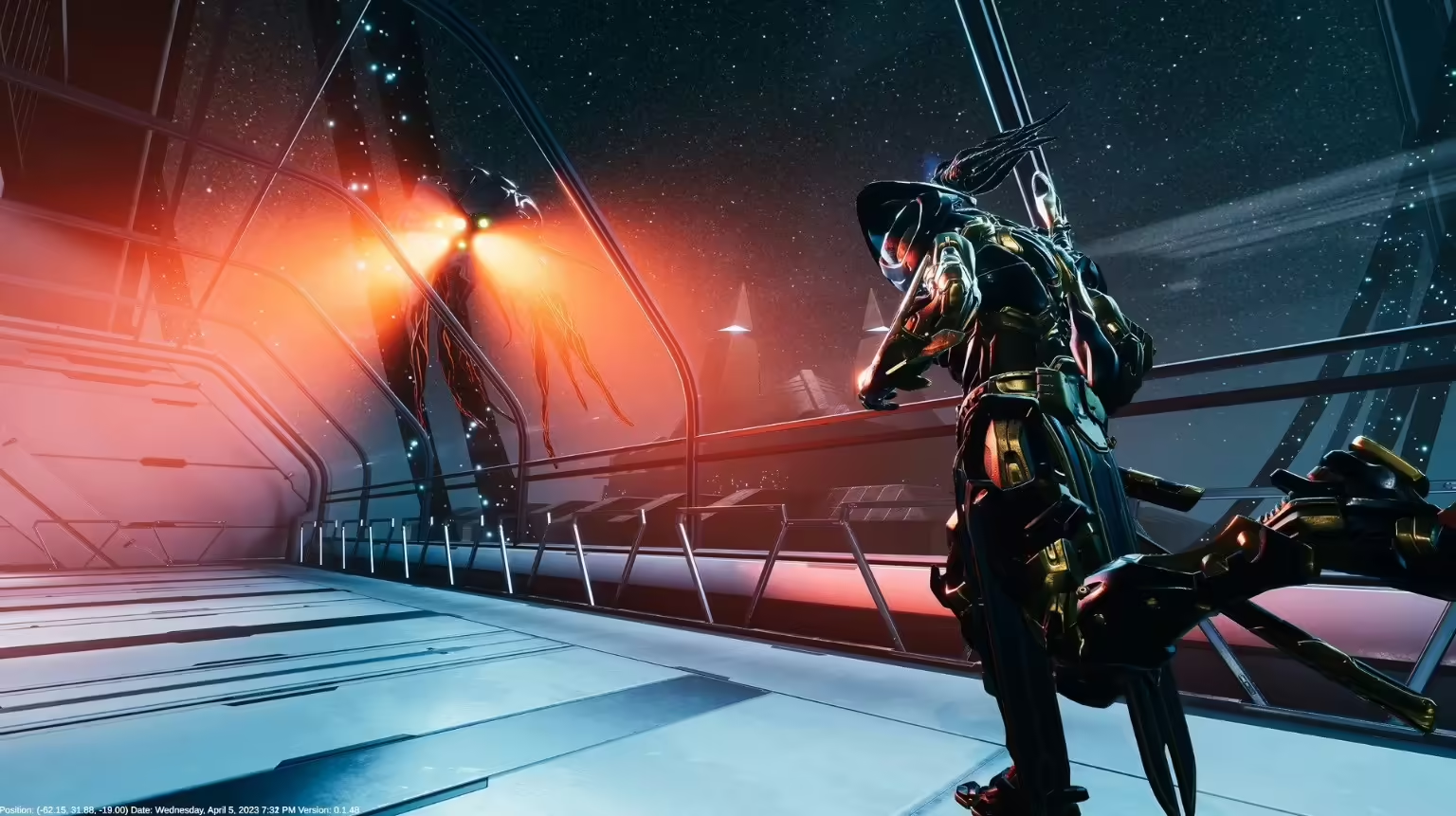
Unioverse, a sci‑fi blockchain gaming platform, has officially announced its closure. In a Discord message posted yesterday, founder Wyeth Ridgway confirmed that the game will no longer operate. He said the team has no way to restore servers or continue meaningful work on the platform. The message ends a six‑month effort to save the project.
The announcement was echoed on Twitter hours later. Ridgway wrote, "Random Games is closing and the future of the @theunioverse is uncertain. However, key contributors are stepping in to try to preserve it. Stay tuned."
The Discord post gave more background. Ridgway said the crypto and gaming landscape has changed too much in recent months. AI is also shifting how content gets made. Despite talks with publishers and potential backers, the team could not find a viable way forward. He thanked the community and said more updates will follow in a detailed post‑mortem.

What Was Unioverse?
Unioverse was a blockchain gaming ecosystem with a sci‑fi setting 700 years in the future. The world was built around a massive ancient space station that enabled instant travel across galaxies. This story universe was designed to support games, media, and fan creations.
The platform offered a royalty‑free SDK to developers. That SDK included AAA‑quality game assets such as 3D models, characters, music, and animation. Anyone could use these to build new games, comics, or merchandise. Users kept all profits from their own creations.
Unioverse also launched NFT avatars as part of its gameplay system. These NFTs were interoperable across games in the platform and required for access.
Funding History
Unioverse launched through the studio Random Games in 2022. That September, the company raised $7.6 million in seed funding. Backers included Resolute Ventures, Asymmetric, IGNIA, ID345, 2 Punks, Polygon, and others. The round was co‑led by investor Joe McCann and developer David Jones.
Random was co‑founded by Tony Harman and Wyeth Ridgway. Harman had worked at Nintendo on projects like Donkey Kong Country and GTA. Ridgway had led Leviathan Games, known for working on IPs like Terminator and South Park.
The founders called Unioverse a "community-owned web3 franchise" designed to shift power to players and creators. Investors praised its open ecosystem, and its token-driven, content-sharing model.
Development Milestones
Unio Coin Announcement (April 2024)
Unioverse introduced Unio Coin as its main utility token. It had a fixed supply of 4 billion tokens and was bridged across Ethereum chains. Users could earn tokens by converting gameplay progress, including XP and Protens earned from collectibles and in-game actions. A TGE was scheduled for the summer of 2024.
Hoverdrome Tournament (July 2024)
In July 2024, Unioverse launched the Hoverdrome alpha tournament. This event featured $15,000 in cash and 300,000 Unio tokens as rewards. Players raced in a futuristic kart-style game for a place in the live finals. Winners earned game tags, exclusive NFTs, and token prizes. The tournament was free to enter.
Genesis Starfighter NFTs (October 2024)
In late October, Unioverse ran a limited mint for its Genesis Starfighter collection. These were customizable spaceship NFTs. Owners started with blank ships and could create unique visual designs using in-game tools. The ships were built to work across future Unioverse titles. Minting cost 10,000 Unio tokens on the Base network.
Ventus PFP Collection (November 2024)
By December, Unioverse had released its Ventus PFP collection: 5,000 avatars that unlocked gameplay perks and early access to future drops. Each mint required users to lock 50,000 Unio tokens. The NFTs also boosted in-game power ratings and could be burned to reclaim the locked tokens, making it a "free mint" for existing holders.
What Led to the Shutdown
In the July 10 Discord post, Ridgway explained the situation clearly. The team had spent six months seeking funding and partners but found no solution. He said that the crypto and web3 landscape had changed dramatically. On top of that, AI has changed how digital content is created, altering the project’s core assumptions.
Even with backing from industry veterans and prior investor interest, the platform couldn't survive. Ridgway said they no longer had the means to run the servers, nor continue any work in a meaningful way. The shutdown takes effect immediately.
He emphasized that they will work to hand over Unioverse assets to someone who might be able to keep the franchise alive.
What Comes Next for the Community
The future of Unioverse remains uncertain. But Ridgway's tweet suggests that others may step in to preserve parts of the ecosystem. He wrote, "key contributors are stepping in to try to preserve it," though he gave no further detail.
He also promised to publish a full post‑mortem. That document will include lessons learned and provide answers to the community. It could offer guidance for other builders in the blockchain gaming space.
The Discord message also left the door open for reuse of Unioverse assets. Since the platform was built around royalty-free tools, developers may still create or remix content using the available SDK, lore, or NFTs.
Context in Web3 Gaming
Unioverse joined a trend of projects pushing for open game economies. These efforts centered on creator-owned content, token economies, and community-first platforms. Many studios followed this path between 2021 and 2023. Some gained attention. Others faded after market crashes.
Blockchain gaming cooled off in 2023. Token values fell and NFT interest dropped. At the same time, AI tools like image and code generators started to reshape how indie content is made. That shift made some asset-driven projects less competitive or harder to fund.
Unioverse tried to adapt with updates like Hoverdrome and Ventus. But the business model didn't hold. Like other web3 startups, it struggled to bridge the gap between early hype and long-term playability.
Final Word
Unioverse has shut down. The team behind it confirmed the news recently, citing market shifts, AI trends, and funding challenges. Random Games, the studio behind the platform, will close as well.
While the game is offline, parts of the world it created may live on. Its assets, characters, and tools may find new life in other projects. Key contributors are reportedly stepping in. More will be known when the full post‑mortem is released.
For now, Unioverse ends as an ambitious blockchain game project that tried to build an open, interoperable future.