PlayToEarn















 Plus
Plus



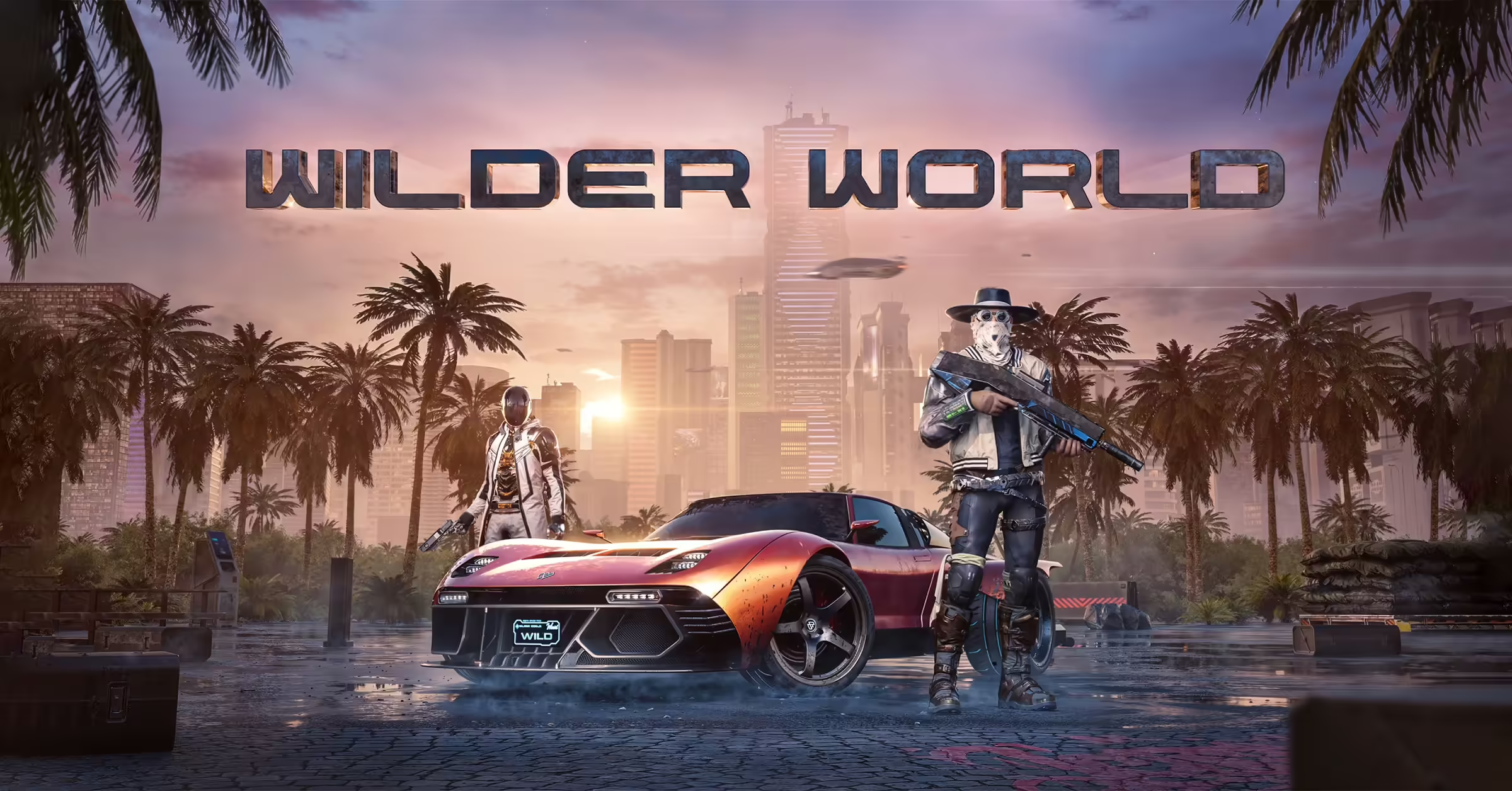
The open world simulation Wilder World has officially initiated a major structural reorientation to become an AI-first ecosystem at every layer of its project today, February 24, 2026. This strategic pivot follows months of internal development aimed at building core artificial intelligence systems rather than simply utilizing existing AI tools. According to project lead n3o, this transition is essential for the project to remain at the forefront of the metaverse sector and avoid disruption from the rapidly evolving technological landscape.
While the overarching vision, core products, and key leadership team remain unchanged, the main focus has shifted toward how the project builds and leverages autonomous AI Agents. This reorientation is designed to support a persistent, player-owned environment where identity, assets, and experiences evolve through the interaction between human users and AI entities.
Upcoming Product Roadmap and Open Source Commitment
To support this AI-first mandate, Wilder World is scheduled to release a new generation of products and services within the next 30 to 60 days. These upcoming releases are intended to accelerate all aspects of the ecosystem's development. Every component of this new product suite will be 100% open source and built natively onchain, prioritizing security, privacy, and digital sovereignty for its citizens.
The deployment of these services is expected to create additional utility sinks for the native $WILD token and various in-world resources. Furthermore, the team anticipates a significant surge in activity on the Z Chain, the project's specialized blockchain infrastructure. The Z Chain is designed to handle over 100,000 transactions per second (TPS) with sub-400ms block times, providing the performance required for a highly active agent-driven economy.
The Role of AI Agents in Wiami
Under the new structural framework, AI Agents will manage complex tasks within the virtual metropolis of Wiami and the ZERO protocol. These tasks include managing mining operations, performing DAO analytics, and facilitating seamless player onboarding. Agents are capable of interfacing with external applications and data sources, evolving over time through a cycle of training, feedback, and collaboration with the community.
This integration allows for the creation of what the team describes as a "living metaverse" where the future of civilization is shaped by player choices and agent interactions. The project has already implemented specialized telekinetic lifeforms known as GENs, which currently assist with resource mining and hologram projections. The new AI-first approach will expand these capabilities, allowing for more sophisticated agentic behaviors within isolated, encrypted environments for maximum user control.
Economic Impact and Metropolis Upgrades
The reorientation coincides with the imminent rollout of the Metropolis upgrades, which are designed to make the $WILD token deflationary. This is achieved by reducing the total supply through recurring revenue generated from in-game asset "Packs". By combining these deflationary mechanics with the new utility-driven demand from AI services, the project aims to stabilize and grow its onchain economy.
As of early 2026, the $WILD token is approximately 95.85% unlocked, with a circulating supply of roughly 479 million out of a maximum 500 million tokens. The project maintains high social engagement with over 250,500 followers on its primary community channels. The shift toward an open-source, AI-agent model is intended to broaden the potential user base by reducing the barriers to decentralized contribution and participation.
Wilder World: A New Dimension of Reality
Wilder World is a massive open-world metaverse built with Unreal Engine 5 and Solana infrastructure, allowing players to race, fight, and build in the persistent city of Wiami. The title features multiple high-fidelity game modes, including street racing and first-person shooter (FPS) battles. Players can own and trade a variety of digital assets, from high-performance vehicles to residential plots on Genesis Land.
The ecosystem utilizes ZERO ID (ZID), a sovereign identity system minted on the ZNS Protocol, to ensure that citizenship and governance remain decentralized. With recent updates focusing on Wiami Wheels Alpha and advanced avatar creation tools, the project is moving toward a broader, playable preview of its open-world environment later in 2026. The current reorientation as an AI-first platform serves as the foundational layer for these upcoming expansions.
"Our goal is not to just use AI, but to build the core AI systems that shape the future of the metaverse".
Relevant Game: Wilder World
Wilder World is an immersive onchain simulation that blends AAA gaming with decentralized finance. Players earn $WILD by completing quests, mining resources, and participating in high-stakes street races. The project recently introduced Trinity Totems, symbolic relics that evolve over time and are wearable by in-game avatars. The $WILD token is used for all marketplace transactions and serves as a governance asset, allowing holders to propose and vote on the future development of Wiami.
Wilder World recorded a 232% increase in value during its early 2026 recovery phase, reaching approximately 42 US Cents per token in February.