PlayToEarn













 Plus
Plus



Solana Mobile is making its hardware-backed crypto infrastructure available to all Android device makers, marking a strategic shift from building its own phones to becoming a platform provider for the broader Android ecosystem. The announcement was made at Mobile World Congress 2026 in Barcelona on March 2, 2026, as Solana Mobile held meetings with OEM partners throughout the event.
The Solana Mobile Stack, which has powered the company's Saga and Seeker smartphones, is now offered as a turnkey, modular integration for any hardware manufacturer running Android. It is opt-in and designed not to interfere with Google Mobile Services, payment certifications, or standard Android security approvals, keeping the path to adoption straightforward for manufacturers.
What the Stack Brings to Any Android Device
The Solana Mobile Stack is built around three core components. The Seed Vault uses the device's existing secure element, the same hardware technology that enables contactless payments, to store private keys at the hardware level. This creates self-custody security that software wallets cannot match, as private keys never touch the Android operating system or any application layer. The Seeker Wallet sits on top of the Seed Vault, providing a consumer-facing interface for sending, receiving, buying, and selling digital assets at near-zero cost. Yield generation through staking and curated DeFi access are built directly into the wallet. The third pillar is access to the Solana dApp Store, a curated marketplace for decentralized applications spanning gaming, payments, DeFi, and AI tools.
OEMs integrating the stack can also earn recurring revenue through transaction-level revenue sharing, a model Solana Mobile frames as a fundamental shift in how hardware manufacturers can participate in the economics of their users' financial activity. The SKR token is designed to align incentives across OEMs, developers, and users within the shared platform.
Scale and Validation Behind the Move
The stack is not theoretical. Solana Mobile has shipped more than 200,000 devices across the Saga, launched in 2023, and the Seeker, launched in 2025. Users across those devices have generated over $5 billion in onchain transaction volume, validating the production readiness of the technology. The stack has already been tested and proven on MediaTek Dimensity chipsets, making it directly compatible with one of the most widely used chipset families in the Android market. MediaTek ships approximately 46 to 50 percent of Android devices globally, representing close to 2 billion phones per year, a distribution channel that dwarfs anything a single smartphone product line could reach.
Solana Mobile points to broader market context as part of its case for OEMs: 580 million people globally hold digital assets, and stablecoin transaction volume on blockchains reached $27.6 trillion in 2024, surpassing the combined volumes of Visa and Mastercard. Major payment infrastructure providers including Visa, Stripe, Western Union, and PayPal are already active on Solana, meaning OEM devices integrating the stack connect their users to live financial rails from day one.
SeekerClaw: An AI Agent That Lives on Your Phone
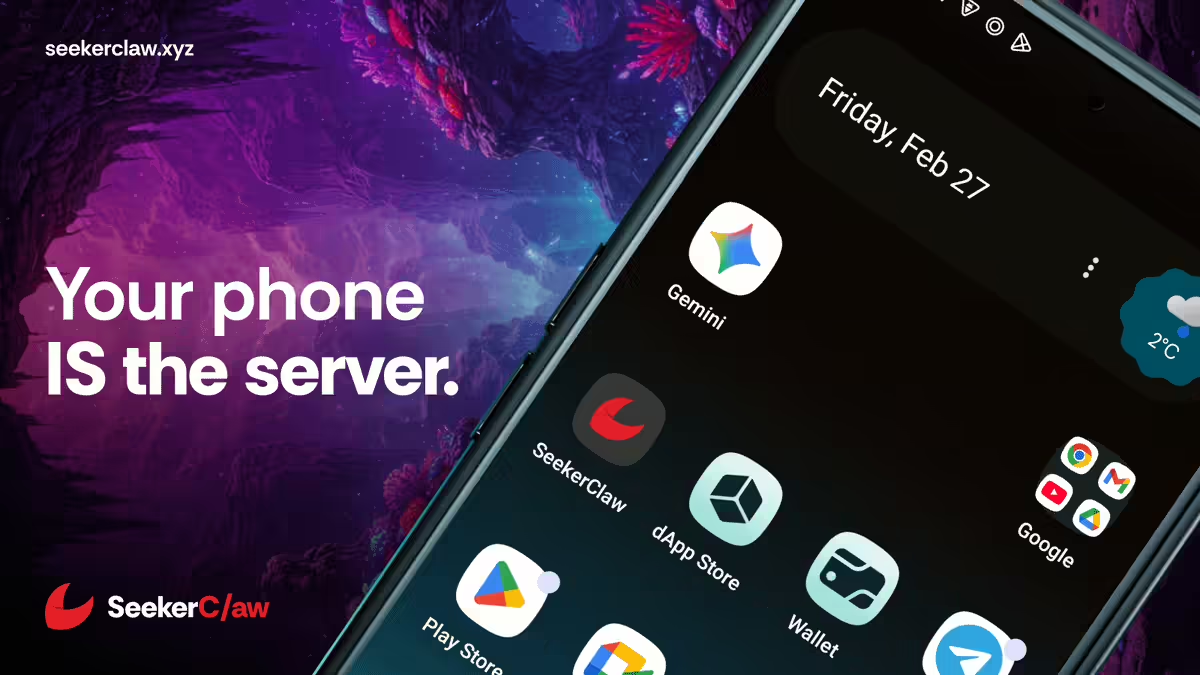
Days before the OEM announcement, on February 27, 2026, a complementary development arrived for existing Seeker owners. SeekerClaw, an open-source AI agent built specifically for the Seeker phone, launched on the Solana dApp Store. It represents one of the more practical demonstrations of what hardware-backed web3 infrastructure can enable when combined with on-device AI.
SeekerClaw turns the Seeker into a 24/7 autonomous agent that monitors wallets, executes trades, and communicates with users via Telegram. The entire setup takes under one minute. Once running, the agent checks SOL and SPL token balances, sends transactions, swaps tokens via Jupiter, and creates limit orders and dollar-cost averaging positions, all secured by the Seed Vault's hardware layer so that transaction signing never exposes private keys to the agent itself.
The agent is powered by Claude and supports the Opus, Sonnet, and Haiku model tiers. It maintains persistent memory, runs on a customizable schedule, and includes 35 built-in skills ranging from crypto price tracking and news briefings to calorie tracking and reminders. Users can extend the agent's capabilities by adding custom skills without writing code. Native device integration extends to GPS, camera with AI vision, SMS, calls, clipboard, text-to-speech, and app launching, giving the agent full control of the phone's native functions alongside its onchain capabilities.
About the Solana Seeker and Its Ecosystem
The Solana Seeker, priced at $450 during presale, is the second-generation web3 smartphone from Solana Mobile. It runs Android and includes the Seed Vault, the Solana dApp Store 2.0, and a Seeker Genesis Token, a soulbound NFT unique to each device that unlocks exclusive rewards, early app access, and ecosystem benefits within the Solana network. The SKR governance token, which carries a fixed total supply of 10 billion, enables Seeker holders to vote on platform decisions, stake through Guardians to earn rewards, and participate in dApp Store curation. Thirty percent of the total SKR supply was allocated for an airdrop to more than 100,000 Seeker device users and early developers.
With the Solana Mobile Stack now open to all Android OEMs and SeekerClaw live for Seeker owners, Solana Mobile's position shifts from consumer hardware company to infrastructure layer for mobile crypto adoption at scale. The stablecoin volume that passed Visa and Mastercard in 2024 already runs largely on Solana rails. The next question is how many of the world's Android devices will carry the hardware layer needed to access it.