PlayToEarn




















 Plus
Plus



Pixie Chess Goes Live With Onchain Pieces and a Growing ETH Prize Pool
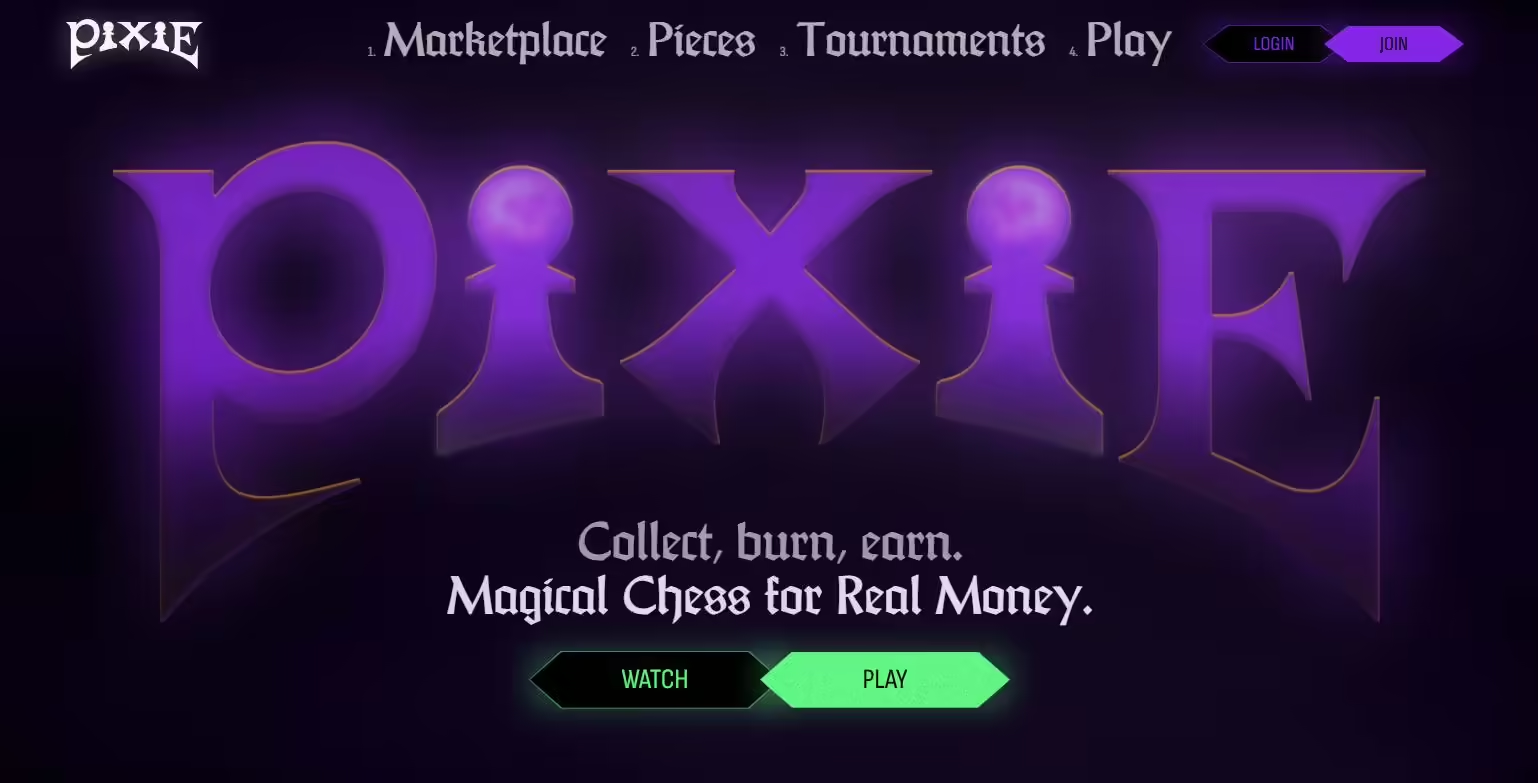
Pixie Chess has launched, bringing a fresh take on competitive strategy to the onchain gaming space. The game combines classic chess with collectible trading card mechanics, creating a format where the pieces players own, trade, and burn directly shape both the competitive meta and the prize pool.
At launch, the game's vault holds 82.95 ETH, all of it earmarked for tournament prize pools. That figure breaks down to 34.39 ETH generated through piece sales and 48.56 ETH injected directly by the team. The prize pool is live and growing.
$5.2 Million Seed Round Led by Paradigm
The launch comes alongside the disclosure of a $5.2 million seed funding round. Paradigm led the investment, with SeedClub joining as an additional institutional backer. A group of angel investors also participated, including Adam, Jordi Hays, Deployer, Trevor McFedries, Chev, ARB, Dylan Abruscato, and Ruby Thelot, among others.
Pixie Chess was built through Paradigm's Entrepreneur in Residence program by founder Josh Harris, who has described the project as a novel crypto game and financial experiment. The inspiration draws from chess, trading card games, and onchain governance structures like NounsDAO, with the goal of merging competitive strategy with a player-driven economic layer.
How Pixie Chess Works
At its core, Pixie Chess plays like chess but replaces standard pieces with collectible, ability-bearing tokens that exist onchain. Each piece has unique properties that change how it performs on the board, giving players reasons to build and curate specific collections rather than simply playing with a fixed set.
New pieces enter circulation every day through two channels: auctions and packs. This daily release schedule keeps a steady supply of new assets flowing into the ecosystem while giving players ongoing opportunities to acquire, upgrade, or trade their collections.
Pieces are fully player-owned. They can be held as collection items, traded on the open market, or used in competitive play. The ownership model follows the broader logic of onchain gaming, where assets persist on-chain and are not controlled by the developer after the point of sale.
The Burn-to-Enter Tournament System
One of the most distinctive features of Pixie Chess is its tournament entry mechanic. To participate in a tournament, players must burn one or more pieces, permanently removing them from circulation. Once a piece is burned, it is gone. There is no recovery, no reset, and no way to retrieve it.
This mechanic creates real stakes around competitive play. Entering a tournament is not a free action. Players must weigh the value of the pieces they are sacrificing against the potential rewards on the other side. Over time, burns gradually reduce total supply, which means the composition of the piece ecosystem shifts after every tournament cycle.
The prize pool that players compete for is funded directly by piece sales. Every transaction in the daily auction and pack system contributes to the vault, which grows in proportion to player activity. The current 82.95 ETH in that vault reflects how much has already moved through the system since launch.
A Meta That Evolves Through Play
Because pieces burn on entry and are never replaced once destroyed, the game's meta changes after every tournament. Powerful or commonly used pieces become rarer the more they are sacrificed, which shifts what strategies are available to the broader player base.
This creates a feedback loop between the economic layer and the competitive layer. Demand for specific pieces can rise as their supply shrinks. Players who hold pieces that are frequently burned may find the value of their collection increasing, not just in competitive terms but in trading terms as well. The game is designed so that collecting, trading, and competing are not separate activities but interconnected systems.
The framing the team uses is straightforward: think Pokemon and Magic: The Gathering merged with chess.
What Is Pixie Chess
Pixie Chess is an onchain strategy game built as a novel financial experiment by founder Josh Harris during his time as Entrepreneur in Residence at Paradigm. The project draws structural inspiration from NounsDAO, applying a model where daily asset releases fund a shared prize pool that grows in direct proportion to community participation.
The game launched following a beta waitlist period that ran from January 23 to February 6, 2026. Since then, the team has been preparing the full release, which went live with the vault already seeded at 82.95 ETH and daily piece auctions running from day one.
The game operates at the intersection of strategy, collection, and economic design. Players can approach it as a chess title focused on competitive ranked play, as a collector looking to assemble a strong set of ability pieces, or as a trader watching the daily market to buy and sell based on supply shifts caused by tournament burns.
With 82.95 ETH already sitting in the prize pool on launch day and piece supply decreasing with every tournament that runs, the economic structure of Pixie Chess is built to compound over time.