PlayToEarn




















 Plus
Plus



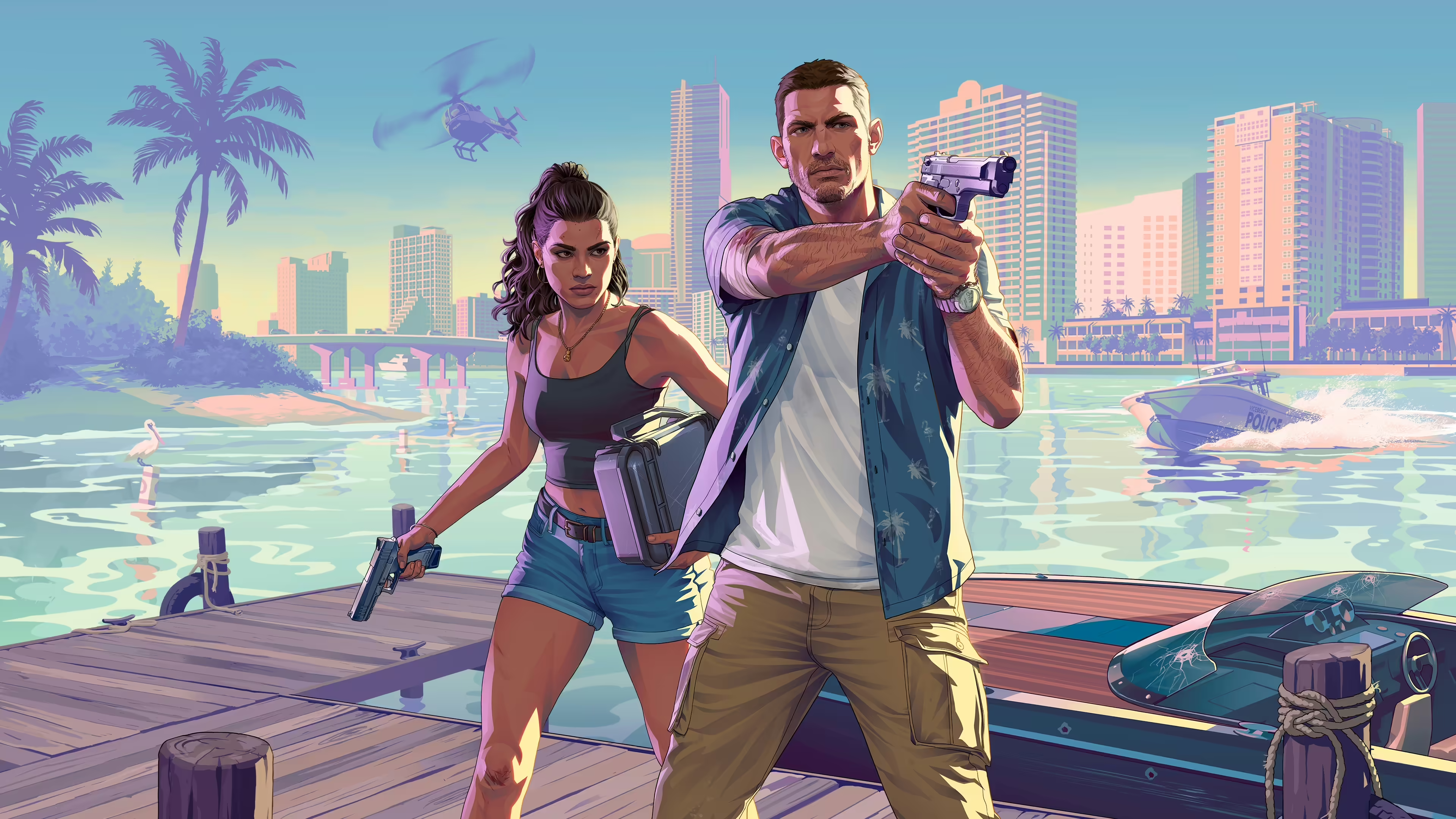
Two title IDs linked to Grand Theft Auto VI have been added to Sony's PlayStation database, a technical step that typically precedes the activation of official store listings and pre-order pages. Backend observers flagged the additions on March 1, 2026, and noted that pre-order infrastructure could go live in short order. The IDs are unusual in one specific way: rather than a single entry, two distinct identifiers have been registered. According to those who track PlayStation backend data, Deluxe or Ultimate editions typically share the same title ID as the standard version, making the dual entry a point of speculation for the community.
No official explanation has been provided for the two separate registrations. Possibilities being discussed include region-specific listings, a digital and physical split, or an undisclosed edition structure. Rockstar and Take-Two have not commented.
November 19, 2026 Is the Date
GTA 6 is set to release on November 19, 2026, for PlayStation 5 and Xbox Series X|S consoles. Beebom Take-Two reaffirmed the date during its Q3 FY2026 earnings call, with CEO Strauss Zelnick stating the studio feels confident about the timeline and that marketing beats are confirmed to begin in summer 2026. For Zelnick, even disclosing that marketing was planned represented a significant departure from the company's typically tight-lipped communication style.
The game has passed through two major delays. An original 2025 release window shifted to May 2026, which was then pushed again to November. Rockstar has stated that the extension was necessary to deliver the level of quality players expect from the franchise. With the marketing campaign now publicly on the calendar for summer, industry observers treat the November 19 date as more credible than any previous target.
Pre-orders are expected to open ahead of the full marketing push, with analysts pointing to a window between mid-2026 and early fall. Historical patterns from prior Rockstar releases show that Red Dead Redemption 2 opened pre-orders roughly nine months before launch. The title ID additions in PlayStation's backend system represent the kind of preparatory infrastructure move that typically comes before such an announcement.
Price, Editions, and Platforms
Rockstar has not officially confirmed pricing, but market signals point to a higher-than-standard tag. GTA 6 will likely be priced at $80 for the standard edition, matching industry trends and analyst predictions, as AAA publishers are slowly adopting the $80 base pricing for their biggest releases. Beebom Deluxe or Collector's Editions are expected to push above $100, possibly reaching $149.99, following the pricing logic Take-Two has applied to re-releases and premium bundles in the past. A Swiss retailer listing that briefly suggested $100 for the standard edition was removed, and Take-Two has since indicated their pricing strategy values the product without reaching that threshold for the base game.
The game launches exclusively on PS5 and Xbox Series X|S. A PC version has not been officially confirmed, though Rockstar's track record with GTA 5 suggests a later release on PC following the initial console window. Older hardware including PS4 and Xbox One are not being supported, reflecting the technical demands of the title's scale.
What GTA 6 Actually Is
Set in the fictional state of Leonida, a sprawling reimagining of Florida with a modernized Vice City at its center, GTA 6 introduces two playable protagonists for the first time in the series' mainline entries. Jason and Lucia Caminos drive the narrative, with promotional material drawing comparisons to a Bonnie-and-Clyde dynamic. Two cinematic trailers have been released, but a full gameplay reveal has not yet occurred. That reveal is expected to accompany or follow the start of the summer marketing push.
GTA 5, the previous instalment, has now sold over 225 million copies, and GTA Online continues to significantly outperform expectations, contributing to Take-Two's confidence around GTA 6's impact. The Sunday Guardian GTA Online alone generated $500 million for Rockstar in 2022, demonstrating the commercial ceiling for a live-service open-world economy running on traditional game infrastructure.
What GTA 6's Scale Means for Gaming Economies
For the blockchain gaming space, GTA 6 occupies an interesting position. Rockstar has no confirmed plans to integrate NFTs, cryptocurrencies, or any onchain mechanics into the title. In fact, the studio banned the use of crypto and NFTs on third-party GTA 5 modded servers in 2022, explicitly citing commercial exploitation as the reason. That policy is enforced through Take-Two's Terms of Service and has resulted in cease-and-desist actions against servers attempting to monetize through digital tokens.
What GTA Online did build, however, is one of the most successful player-driven in-game economies ever created, one entirely centralized but staggeringly large. The virtual currency ecosystem, the property systems, the vehicle markets, and the business ownership mechanics within GTA Online represent exactly the kind of persistent player economy that Web3 gaming developers have been attempting to recreate with onchain infrastructure and true asset ownership. The difference is that Rockstar built it without decentralization, without NFTs, and without giving players any ownership rights over what they earn or buy.
That contrast is not lost on the Web3 gaming industry. The same week GTA 6 title IDs appeared in Sony's backend, onchain games such as Star Atlas and ORDINEM were making headlines for their own economies built around verifiable asset ownership, tradeable NFT items, and token-denominated reward structures. Those projects operate at a fraction of GTA's scale, but they represent the philosophical opposite of how Rockstar has built its economy: players own what they earn, can trade it freely, and carry it outside the game environment.
Whether GTA 6 will eventually influence how mainstream studios think about player ownership remains an open question. Take-Two has demonstrated broader interest in blockchain through its $12.7 billion acquisition of Zynga, which has explored NFT-based gaming on its own. For now, GTA 6 will launch as a traditional AAA title, but its enormous economic footprint will keep it at the center of conversations about the future of in-game value and what it means to truly own a digital asset.