PlayToEarn




















 Plus
Plus



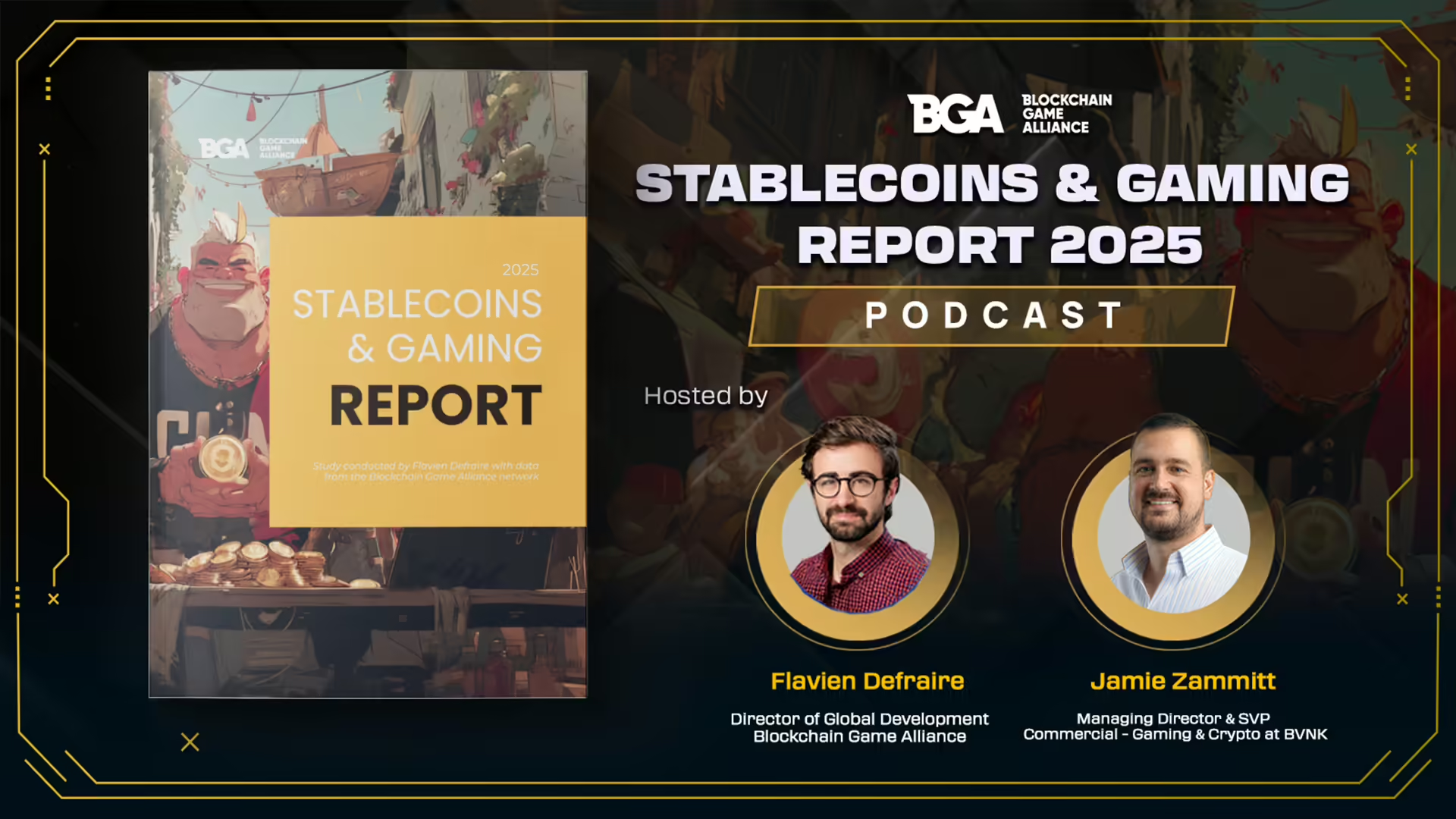
The Blockchain Game Alliance (BGA) has launched episode one of its new Stablecoins and Gaming Podcast. The debut episode features Jamie Zammitt, SVP Commercial Gaming and Managing Director Gibraltar at BVNK, and is live now on YouTube. The series is titled "Stablecoins and Gaming Report 2025 Podcast" and is structured as a four part limited run.
Hosted by Flavien Defraire, Director of Global Development at BGA, the conversation unpacks how stablecoins are moving from a niche workaround into core infrastructure for the gaming and iGaming economy.
BVNK at the Center of the Stablecoin Payments Push
BVNK is a London based stablecoin payments infrastructure provider founded in 2021. The company enables businesses to send, receive, store, and convert stablecoins across more than 130 countries and operates with 25 licenses and regulatory approvals worldwide. It holds ISO 27001 and SOC 2 Type II certifications and recently secured a MiCA license in Malta.
Zammitt brings a layered background to the conversation. Born and raised in Gibraltar, one of the historic capitals of regulated iGaming, he spent years in the industry with companies including Pragmatic Play before moving into payments. He has been personally active in crypto since 2016.
BVNK serves fintechs, marketplaces, trading platforms, gaming operators, and global payroll services. Its infrastructure already powers stablecoin payouts for customers including Worldpay, Deel, and Rapyd.
Mastercard Deal as Institutional Validation
On March 17, Mastercard announced a definitive agreement to acquire BVNK for up to $1.8 billion, including $300 million in contingent payments. The deal is subject to regulatory approvals and is expected to close before the end of 2026. It represents Mastercard's largest crypto acquisition to date.
Zammitt framed the acquisition as a turning point for how traditional finance views digital asset infrastructure. "It's validation of our industry," he said in the episode, noting that the landscape is very different than five years ago, when major financial institutions were largely closed off to stablecoins and blockchain rails.
BVNK processed over $30 billion in stablecoin payments in 2025 and had previously raised $91.7 million from investors including Citi Ventures, Visa Ventures, and Tiger Global Management. The company was valued at roughly $750 million before the Mastercard agreement, which is designed to connect onchain stablecoin rails with the card network's global infrastructure.
Regulation Moves From "If" to "When"
A second focal point of the episode is the role of regulation in unlocking stablecoin adoption among licensed operators. The U.S. GENIUS Act and the European Union's Markets in Crypto Assets (MiCA) framework are the two headline developments reshaping boardroom conversations at regulated iGaming companies, though Zammitt noted that further clarity is still needed in the US through the pending Clarity Act.
According to Zammitt, the dialogue with regulated operators is in a very different place than 12 to 18 months ago. "It's not an if, but a when," he said, describing how operators now approach stablecoin adoption.
Agile jurisdictions are moving fastest. Gibraltar and Malta, both of which helped write the global regulatory playbook for iGaming, are now positioning themselves for the same role in web3 payments. Gibraltar issued its DLT framework back in 2017 and is currently revising it. BVNK's MiCA license in Malta is a direct example of that regulatory momentum.
Passive vs. Proactive Operators
One of the sharpest data points from the episode addresses the gap between passive and proactive stablecoin integration. Zammitt shared figures from the US social casino space, where operators adopt crypto and stablecoins at a rate of between 1% and 5% of total deposit volume.
Inside that range, the split is telling. Operators that simply add a stablecoin option to a legacy cashier page see only around 1% uptake. Operators that actively incentivize the alternative rails and redesign user flows around them capture 4% to 5% of deposit volumes instead. For platforms processing hundreds of millions in deposits, that gap represents a meaningful competitive advantage.
Zammitt noted that card payments have been dominant in the US for the past 20 to 30 years, meaning consumer habits are deeply ingrained. "You cannot change ingrained behaviors by just putting an additional payments method," he said, arguing that operators need to redesign incentive structures around stablecoin rails rather than bolt them on.
Beyond Payments: The Full Blockchain Stack
The episode also looks beyond payments to what the full blockchain stack could unlock for operators. Zammitt pointed to three concrete directions. Programmable loyalty uses smart contracts to automatically distribute tradable digital bonuses based on verifiable player milestones, turning loyalty into a transferable asset. Verifiable jackpots leverage onchain randomness to create community driven prize pools where fairness is mathematically provable.
The third direction is self sovereign identity powered by zero knowledge proofs. This approach lets players verify age and identity without exposing sensitive personal data, removing the need for repetitive KYC on every new platform. Zammitt framed the broader opportunity as belonging to crypto native operators that build their full tech stack on blockchain rather than bolting stablecoins onto a legacy cashier.
Context From the BGA Stablecoins and Gaming Report
The podcast series extends the findings of the BGA Stablecoins and Gaming Report 2025, which examined how fiat pegged digital assets are reshaping game economies. The report positioned stablecoins as reliable infrastructure for predictable payouts and transparent pricing rather than speculative instruments.
According to the report, stablecoins processed approximately $2.7 trillion in transfers during 2024, exceeding the combined volumes of Visa and Mastercard. They accounted for about 30% of all crypto transactions, with USDT and USDC making up more than 90% of the fiat backed stablecoin supply. The report also pointed to Roblox and Fortnite as examples of how stable value systems support creator economies, with top creators averaging $38 million annually.
In parallel, the BGA's 2025 State of the Industry Report, published in December, ranked stablecoin adoption in payments among the top three growth drivers for web3 gaming for the first time. The top three drivers were high quality game launches at 29.5%, revenue driven business models at 27.5%, and stablecoin adoption at 27.3%. The report also found that 64.4% of respondents expected policy and regulation to positively influence web3 gaming.
How to Watch
The full episode is live now on the BGA YouTube channel and available through BGA's account on X (@BGameAlliance). The three remaining episodes in the limited run will feature additional voices from the payments and gaming industries, continuing the series' focus on stablecoin infrastructure and the operator playbooks emerging around it.